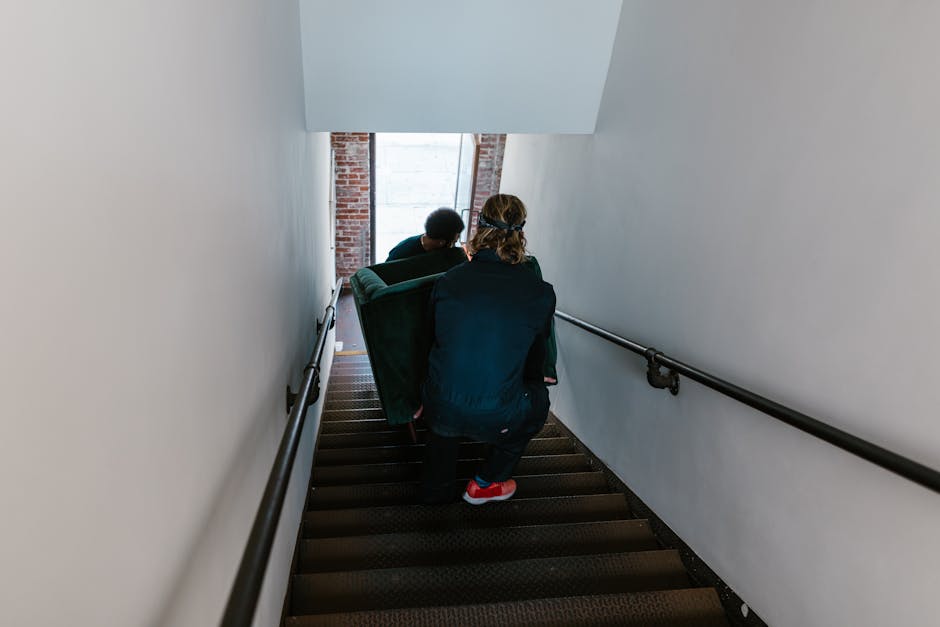
Sofa disposal solutions for East London flats with stairs
If you live in an East London flat with stairs, getting rid of an old sofa can feel far bigger than the sofa itself. Narrow landings, awkward turns, shared hallways, heavy lifting, and the real risk of scuffing a wall or blocking the stairs for half the afternoon - it adds up fast. Sofa disposal solutions for East London flats with stairs are all about making that job safer, quicker, and less stressful, whether you are replacing a tired three-seater, clearing a rental, or dealing with a bulky item that simply will not fit through the door on the way out.
This guide walks through the practical side of sofa removal in real London homes: what the options are, how stair access changes the job, what to check before anyone starts lifting, and how to avoid the common mistakes that turn a simple clearance into a grim little saga. If you want a straightforward next step, you can also learn more about the team behind the service on the About Us page or head straight to the contact page if you are ready to ask for help.
Table of Contents
- Why Sofa Disposal in East London Flats with Stairs Matters
- How Sofa Disposal in East London Flats with Stairs Works
- Key Benefits and Practical Advantages
- Who This Is For and When It Makes Sense
- Step-by-Step Guidance
- Expert Tips for Better Results
- Common Mistakes to Avoid
- Tools, Resources and Recommendations
- Law, Compliance, Standards, or Best Practice
- Options, Methods, or Comparison Table
- Case Study or Real-World Example
- Practical Checklist
- Conclusion
- Frequently Asked Questions
Why Sofa Disposal in East London Flats with Stairs Matters
Sofa disposal sounds simple until you face a staircase that turns sharply halfway up, a thin front door, or a landing that barely gives you room to breathe. In East London, many flats sit in older conversions, maisonettes, or compact apartment blocks where access is the real challenge. The sofa might be perfectly fine to remove in theory, but the route out is another matter entirely.
That is why sofa disposal solutions for East London flats with stairs matter so much. They reduce the risk of damage, prevent injury, and save a lot of time. They also help you avoid the classic mistake of trying to force a bulky item down a staircase with one person at the top and another at the bottom, both pretending they are calm. Truth be told, that rarely ends well.
There is also the matter of neighbours and shared spaces. In a block with tight stairwells, a large sofa can obstruct access, scrape paintwork, or make a noisy, awkward mess in a building where everyone is already coming and going. A proper disposal plan respects the building, the people in it, and your own sanity.
Expert summary: if stair access is tight, the best sofa disposal approach is usually the one that balances safety, speed, and certainty. The cheapest option is not always the cheapest once damage, stress, and wasted time are counted.
How Sofa Disposal in East London Flats with Stairs Works
Most sofa disposal jobs follow a simple logic: assess the item, assess the access route, choose the removal method, then move the sofa out with the least disruption possible. The staircase changes every part of that process. A sofa that would be easy to lift from a ground-floor flat may need careful dismantling, extra carrying protection, or a two-person team when stairs are involved.
In practice, the process usually starts with a quick check of a few basics:
- the sofa dimensions
- the number of seats and whether it separates into sections
- the width of staircases, landings, and doors
- the distance from the flat to the vehicle
- parking access and loading restrictions
- any lifting hazards, such as sharp turns or low ceilings
If the sofa can be carried out intact, removal is often fairly direct. If not, it may need to be broken down into smaller parts first. That is not a failure; it is simply the sensible route in a building that was never designed around oversized modern furniture. A sectional sofa, recliner, corner unit, or sofa bed can be particularly awkward, because hidden metal frames and mechanisms increase both weight and complexity.
Professional removers will normally plan the route before moving anything. They look at the narrowest point first, not the easiest one, because that is where problems appear. They may use moving blankets, straps, protective gloves, and trolleys where suitable. But on stairs, trolleys are not always helpful, so technique and coordination matter more than kit. Two careful people and a measured route often beat brute force. Every time.
Key Benefits and Practical Advantages
For anyone living in a flat with stairs, the biggest benefit of a good sofa disposal solution is peace of mind. You know the item will be removed without turning the hallway into an obstacle course or leaving you with a strained back and a chipped wall.
- Safer lifting: bulky sofas can be awkward and unstable on stairs, so a proper plan reduces injury risk.
- Less property damage: careful removal protects walls, bannisters, doors, floors, and paintwork.
- Faster clearances: a team that understands stair access can often complete the job in one visit.
- Lower stress: you do not have to coordinate friends, borrow a van, or guess whether the sofa will fit.
- Better for landlords and tenants: quick, tidy removal helps with move-outs, refurbishments, and end-of-tenancy deadlines.
- Cleaner spaces: the old sofa is gone, the flat feels usable again, and the place stops looking half-finished.
There is also a subtle but important advantage: good disposal planning keeps the job from spreading into your day. No waiting around for a friend with a van. No multiple trips. No dragging a damp, dusty sofa through communal space at 8pm because "that was the only time available." We have all seen that kind of arrangement, and it tends to go a bit sideways.
Who This Is For and When It Makes Sense
This kind of service is useful for a wide range of people, not just those with very large sofas. In East London, stair access can make even a standard two-seater a problem if the hallway is tight or the building is old.
You may need sofa disposal support if you are:
- moving out of a flat and need furniture removed quickly
- replacing a worn or damaged sofa
- clearing a rental property after tenants leave
- refreshing a home after renovation or redecorating
- dealing with inherited furniture that cannot stay
- preparing a property for sale or letting
- managing an office or mixed-use property with domestic-style seating
It makes particular sense when the building has narrow staircases, no lift, awkward corners, or limited parking nearby. If the sofa is too large to go out in one piece, or if you are not sure it can be safely lifted without damage, that is usually the point where professional help becomes the sensible choice.
And if you are wondering whether it is worth arranging specialist help for "just one sofa," ask yourself this: is it really just one sofa once the stairwell, the labour, the risk, and the time are all counted? Often, no.
Step-by-Step Guidance
Here is a practical way to approach sofa disposal in a flat with stairs, without overcomplicating it.
- Measure the sofa and the access route. Check width, height, depth, and any protruding arms or feet. Then measure stair width, landings, turns, and doorway gaps.
- Look at the layout. Identify tight corners, radiator positions, light fittings, bannisters, and anything that could snag the sofa on the way out.
- Decide whether the sofa can be carried intact. Some sofas separate into sections; others need partial dismantling. If in doubt, assume the route will be harder than it looks.
- Clear the route. Remove shoes, mats, side tables, picture frames, and anything else that could get in the way.
- Protect the property. Use blankets, cardboard, or other cushioning where needed, especially around corners and door frames.
- Plan the lift. Heavy items should not be rushed on stairs. Agree who leads, who supports, and where to pause if needed.
- Arrange parking and timing. This matters more than people think. A great removal plan can still become annoying if the vehicle is nowhere near the door.
- Confirm disposal arrangements. Make sure the sofa is going to an appropriate reuse, recycling, or disposal route, depending on its condition.
If the sofa is still in usable condition, you may also want to think about reuse rather than immediate disposal. That said, in a lot of real flats, the main question is not whether the sofa deserves a second life, but whether it can get safely down the stairs without a dramatic pivot halfway through.
Expert Tips for Better Results
Small details make a big difference with stair-based sofa removal. A few minutes of prep can save a lot of awkwardness later.
1. Check the widest part, not just the obvious part
Many people measure the front of a sofa and call it done. But arms, feet, reclining parts, and curved backs often create the real problem. The widest point is the one that matters.
2. Watch the landing space
A staircase might be wide enough in a straight line and still fail at the landing. That is the moment where the sofa has to turn, tilt, or rotate. If the landing is tiny, the removal plan needs to account for that from the start.
3. Use the door as your first test
If the sofa cannot clear the flat door cleanly, it will not magically behave better halfway down the stairs. Start with the narrowest opening and work outward.
4. Take photos before the move
This is a practical habit, not an obsession. A couple of quick photos help with planning and give you a reference if there are any access concerns later.
5. Keep the route calm and clear
Sounds obvious, but people often try to move furniture while other household items, bags, or even pets are still underfoot. The sofa is enough of a handful on its own.
6. Don't underestimate weight
Some sofas look lighter than they are. A fabric three-seater can still feel oddly dense once you lift it off the floor and angle it down stairs. If it feels too heavy, it probably is.
Practical tip: if the sofa already feels awkward when you try to move it across the room, do not assume the stairs will be fine. Stair movement magnifies every problem, especially balance and grip.
Common Mistakes to Avoid
The biggest mistakes are usually the most familiar ones. The job starts, confidence rises too quickly, and suddenly the sofa is wedged at an angle nobody expected.
- Skipping measurements: guessing almost always causes trouble on stair jobs.
- Ignoring the landing: many removals fail at the turn, not on the staircase itself.
- Trying to move it alone: even if the sofa is not huge, stairs make the lift unstable.
- Forgetting building access: if the vehicle cannot park close enough, the job takes longer and becomes harder.
- Not protecting surfaces: a scuffed wall or chipped bannister can be more annoying than the sofa was worth.
- Leaving disposal until the last minute: deadlines have a way of making the whole thing more stressful than it needs to be.
- Assuming every sofa can be reused as-is: if the item is worn, stained, or structurally tired, recycling or disposal may be the more realistic route.
One small but important point: do not make the route more difficult by trying to save a few extra minutes. Removing a side table, a plant stand, or a hallway bin can make the difference between a clean carry and a minor headache. Sometimes it really is that simple.
Tools, Resources and Recommendations
The right tools do not solve every access problem, but they do make the process smoother. For stair-based sofa disposal, the useful items are usually the unglamorous ones.
- Measuring tape: for checking sofa dimensions, door widths, and landing space.
- Protective gloves: to improve grip and reduce hand strain.
- Moving blankets or pads: useful for protecting walls, corners, and door frames.
- Straps: helpful when lifting awkward items, though not always suitable on stairs.
- Cardboard or floor protection: especially useful in shared hallways or on delicate flooring.
- Torches or good lighting: surprisingly important in darker stairwells and older buildings.
For most readers, the best resource is not more gear but better planning. If you are unsure whether the sofa can be removed safely, it is usually worth speaking to a local clearance provider early rather than finding out the hard way at the bottom step.
You can also review the terms and conditions and privacy policy if you want to understand how enquiries and service information are handled before getting in touch. That kind of clarity is dull in the best possible way.
Law, Compliance, Standards, or Best Practice
When disposing of a sofa in the UK, the main thing is to make sure it is handled responsibly and does not become fly-tipped or dumped in a communal area. Local disposal rules can vary, so it is wise to follow the guidance that applies to your borough or building management arrangements. The exact process depends on where you live and how the property is managed, so do not rely on guesswork.
From a best-practice point of view, there are a few common expectations worth keeping in mind:
- the sofa should be removed safely without creating a hazard in shared areas
- the property should be left tidy and free from debris where possible
- the disposal route should be lawful and appropriate for the item's condition
- any access arrangements should respect neighbours, building rules, and parking restrictions
If the sofa contains broken frames, springs, or sharp components, extra care matters. This is not just about neatness. It is about reducing injury risk during handling and transport. In a flat with stairs, that risk rises naturally because the item is moving through a tighter, less forgiving space.
Professional operators in this space are expected to use sensible handling methods and dispose of waste responsibly. If you are hiring someone, it is fair to ask how they plan to remove the item and what happens to it after collection. A good provider should be able to explain that plainly, without puffing it up.
Options, Methods, or Comparison Table
There are several ways to handle sofa disposal in an East London flat with stairs. The best choice depends on the size of the sofa, the building access, your time, and how hands-on you want to be.
| Option | Best for | Pros | Watch out for |
|---|---|---|---|
| DIY removal | Small sofas, easy access, strong lifting support | Low upfront cost, full control | Heavy lifting, stair damage, transport hassle |
| Van hire with helpers | Moderate-sized sofas and available lifting help | More flexible than DIY alone | Parking, labour, loading stress, time pressure |
| Professional sofa removal | Tight stairs, bulky furniture, limited time | Safer, faster, usually less hassle | Cost may be higher than DIY in some cases |
| Reuse or donation route | Sofas in good condition | Potentially extends item life | Condition checks, collection rules, timing |
For many stair-heavy flats, professional removal is the most practical route because it solves the access issue directly. DIY can still work, but only when the sofa is light enough, the route is forgiving, and you have enough hands. Let's face it, "enough hands" is doing a lot of work there.
Case Study or Real-World Example
Here is a realistic example from the kind of job people often face in East London. A tenant in a first-floor flat needs to remove a bulky three-seater sofa before the end of a tenancy. The building has a narrow stairwell, a tight landing, and a shared entrance that must stay clear for neighbours.
At first glance, the sofa seems manageable. But once measured, it becomes clear that the arm depth and back height make the turn at the landing awkward. Rather than forcing it, the removal plan changes. The team checks the route, protects the hallway edges, and moves the sofa in a controlled way with one person guiding the top and one supporting the lower end. The item is out without any drama, the walls stay intact, and the flat is ready for the next stage.
The important lesson? The removal did not succeed because of strength alone. It succeeded because of planning. That is the bit people often miss when they picture sofa disposal as a simple lift-and-go task.
Practical Checklist
Use this checklist before arranging sofa disposal in a flat with stairs.
- Measure the sofa at its widest and tallest points.
- Measure door frames, stair width, and the landing turn.
- Check whether the sofa can be dismantled safely.
- Clear the route through the flat and stairwell.
- Protect walls, corners, and flooring where needed.
- Confirm parking access and any loading restrictions.
- Decide whether reuse, recycling, or disposal is most appropriate.
- Make sure you have enough help for safe lifting.
- Check building rules if you live in a managed block.
- Book support early if access looks awkward or uncertain.
Quick takeaway: if the route feels awkward before the sofa moves, it will probably feel even more awkward halfway down the stairs. Planning is what keeps the job calm.
Conclusion
Sofa disposal in East London flats with stairs is one of those jobs that looks ordinary until you stand in a narrow hallway with a bulky sofa and nowhere obvious to turn it. The good news is that with the right approach, it does not need to be stressful. Measure carefully, think through the route, protect the building, and choose the removal method that suits the space rather than the other way round.
Whether you are moving out, replacing old furniture, or clearing a property for someone else, the aim is the same: get the sofa out safely and leave the flat in good shape. That is the real win here. Not a heroic struggle. Just a clean, practical result.
If you would like help from a local team that understands the realities of stairs, tight spaces, and time-sensitive removals, you can get in touch here for a straightforward conversation about your options.
Get a free quote today and see how much you can save.
Frequently Asked Questions
How do I know if my sofa will fit down the stairs?
Measure the sofa at its widest point, then measure the staircase width, landing space, and any tight turns. If the sofa is close to the limit, assume it will be harder than it looks and plan for careful handling or partial dismantling.
Can a sofa be removed from a flat without damaging the walls?
Usually yes, if the route is planned properly and protective materials are used. The risk rises when people rush, try to twist the sofa too quickly, or skip surface protection. A careful move is always better than a fast one.
What if my sofa is too big to turn on the landing?
That is a common problem in stairwells. The sofa may need to be dismantled, rotated in a different position, or removed by a team experienced with awkward access. It is one of those moments where a little planning saves a lot of swearing, frankly.
Is it better to dispose of a sofa or try to reuse it?
If the sofa is still in good condition, reuse can be a sensible option. If it is broken, badly worn, stained, or unsafe, disposal is often the more realistic choice. The condition of the item should guide the decision.
Do I need two people to move a sofa down stairs?
For most sofas, yes. Stairs make furniture unstable, and a second person helps with balance, control, and safety. Even smaller sofas can become awkward when you hit a turn or narrow landing.
What should I do before a sofa removal team arrives?
Clear the route, move smaller items out of the way, check parking access, and measure the sofa if you have not already done so. If the building has access rules, make sure you know them in advance.
How long does sofa disposal usually take in a flat with stairs?
It depends on the access, the size of the sofa, and whether it needs dismantling. A straightforward removal can be quick, while a tight stairwell or awkward landing will take longer. Access is the real variable here.
What happens if the sofa cannot be carried out in one piece?
It may need to be taken apart into smaller sections before removal. This is common with corner sofas, recliners, and sofa beds. The goal is to make the item safe and manageable, not to force it through a space it clearly does not like.
Can I leave the sofa in a communal hallway?
Usually you should not leave bulky items in shared areas unless the building management or disposal arrangement specifically allows it. Hallways need to stay clear for safety and access, so it is best to remove the item promptly.
Is professional sofa removal worth it for a single item?
Often yes, especially in a flat with stairs. The labour, access issues, and risk of damage can easily outweigh the effort of doing it yourself. If the stairwell is tight, a professional approach can be the calmer and more cost-effective choice overall.
What if I am on a tight deadline before moving out?
Then speed and certainty matter even more. Book early if possible, confirm access details clearly, and choose a removal method that reduces the chance of delays. Time pressure and awkward stairs are not a lovely combination.
Where can I find more about the company behind this service?
You can read more on the About Us page, or visit the contact page if you are ready to discuss your sofa removal needs.