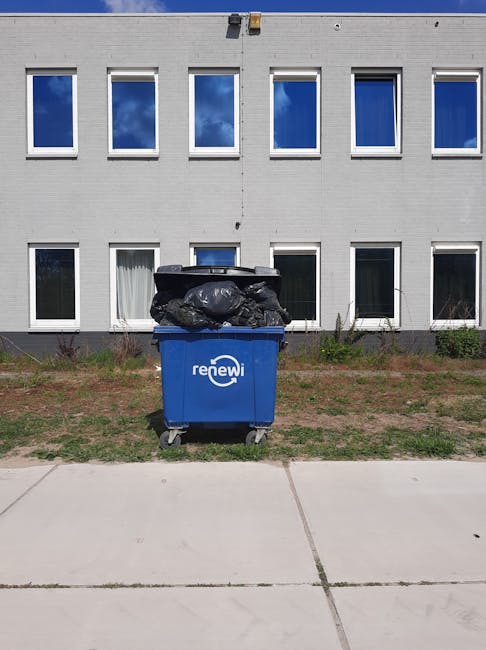
Same-day commercial waste clearance for East London businesses
If your premises have filled up faster than expected, you do not always have the luxury of waiting until next week. Same-day commercial waste clearance for East London businesses is for those moments when clutter starts becoming a problem: a shop refurb spills into the back room, an office needs a reset before tomorrow's visitors, or a storage space in Canary Wharf is suddenly packed with dead furniture, mixed rubbish, and cardboard that should have been gone yesterday.
The good news is that a fast clearance does not have to mean a messy one. Done properly, it is a tidy, organised service that helps you keep trading, keep staff safe, and avoid turning a temporary headache into a bigger operational issue. In this guide, we'll walk through how same-day clearance works, who it suits, what to ask for, and how to get a result that feels calm rather than chaotic. Truth be told, that calm is often the whole point.
Table of Contents
- Why Same-day commercial waste clearance for East London businesses Matters
- How Same-day commercial waste clearance for East London businesses Works
- Key Benefits and Practical Advantages
- Who This Is For and When It Makes Sense
- Step-by-Step Guidance
- Expert Tips for Better Results
- Common Mistakes to Avoid
- Tools, Resources and Recommendations
- Law, Compliance, Standards, or Best Practice
- Options, Methods, or Comparison Table
- Case Study or Real-World Example
- Practical Checklist
- Conclusion
- Frequently Asked Questions
Why Same-day commercial waste clearance for East London businesses Matters
For East London businesses, timing matters as much as volume. A pile of waste is not just unsightly; it can block delivery routes, reduce usable workspace, frustrate staff, and make a customer-facing area look neglected. In a busy location, where footfall and turnaround can be high, a cluttered back area can snowball into a full operational nuisance very quickly.
Same-day service matters because commercial waste has a habit of showing up at the worst possible moment. A restaurant may receive a bulk delivery and need old packaging shifted before the next lunch rush. A studio in Hackney may be reorganising and need desks, broken shelving, and mixed office waste removed in one sweep. A landlord in Whitechapel might need a unit cleared for handover before the keys change hands. It is rarely about convenience alone. Often it is about keeping the day on track.
There is also a reputation angle. Customers notice when a business looks on top of things. Staff do too. And to be fair, nobody works better around overflowing rubbish bags and a broken chair that keeps catching the eye every ten seconds.
Practical takeaway: same-day clearance is not only for emergencies. It is also a smart way to protect trading hours, reduce disruption, and restore order before small problems become expensive ones.
Why East London makes this especially relevant
East London is a mix of high-density business districts, creative workplaces, retail units, industrial pockets, and fast-moving mixed-use streets. That means waste builds up in different ways. An office in Canary Wharf may produce mostly furniture and packaging waste, while a workshop near Stratford could have heavier mixed rubbish after a fit-out or stock refresh. A one-size-fits-all approach rarely works very well.
In many parts of East London, space is tight and access can be awkward. That makes quick, planned removal even more valuable. If waste is left to "deal with later", later tends to arrive with more bags, more dust, and more frustration.
How Same-day commercial waste clearance for East London businesses Works
The process is usually straightforward, but the details matter. A good same-day clearance should feel organised from the first conversation through to the final sweep-up. If it feels rushed in the wrong way, that is usually a warning sign.
1. Initial assessment
You describe what needs removing: office chairs, filing cabinets, packaging, shop waste, builders' debris, redundant stock, or a mix of items. The clearer you are, the smoother the day tends to go. A photo or two can help, especially if access is narrow or the load is bulky.
2. Timing and access planning
Because the work is same-day, the team needs to understand when they can enter, whether there is lift access, loading restrictions, stairs, or a rear entrance, and whether someone will be available on site. In East London, that practical stuff matters. A lot.
3. Sorting and loading
Waste is then separated as needed. Commercial waste clearance can involve general rubbish, recyclables, furniture, and specialist items. If you are clearing out old office furniture, a page like office clearance may be a more suitable starting point than a generic rubbish removal approach. Likewise, if you are disposing of bulky items, furniture disposal can be the more sensible route.
4. Responsible disposal
After collection, the waste should be transported and handled appropriately. This is where a provider's systems matter. Good disposal is not glamorous, but it is the part that protects your business from avoidable trouble later on.
5. Final clear-up and handover
A proper same-day clearance ends with the space being left usable, not half-finished. In an office, that might mean clear walkways and a usable meeting room again. In a shop or unit, it may mean a safe, uncluttered back-of-house area and a floor that is ready for the next task.
Key Benefits and Practical Advantages
The main benefit is obvious: speed. But speed only helps if the clearance is also dependable and sensible. The best same-day commercial waste clearance saves time in ways that are easy to underestimate.
- Less downtime: staff can get back to work faster, and customers are less likely to be inconvenienced.
- Safer premises: clearing trip hazards, sharp edges, and blocked exits reduces day-to-day risk.
- Better presentation: a business looks more organised and more credible when the space is under control.
- Reduced stress: one less thing to juggle on a busy day is never a bad thing.
- More flexibility: ideal for last-minute changeovers, inspections, inventory changes, or urgent handovers.
There is also a practical money-saving angle. If waste stays in the wrong place, staff may waste time moving it around, hiding it, or working around it. That is not efficient. It is just organised chaos with extra steps.
Benefits by business type
Offices often benefit from fast removal of desks, chairs, monitors, and archive clutter, especially before a refit or tenancy change.
Retail businesses need quick turnarounds when stockroom waste, display units, or packaging starts stealing usable floor space.
Hospitality venues may need urgent help after deliveries, refurbishments, or end-of-season stock changes.
Trade and fit-out teams often want builders' debris gone fast so the next phase can begin. If that sounds familiar, builders waste is worth considering for heavier project-related clearance.
Who This Is For and When It Makes Sense
This service is not only for emergency situations. It makes sense whenever waste is getting in the way of productivity, access, safety, or presentation.
Businesses that commonly use same-day clearance
- Offices relocating, downsizing, or reorganising
- Shops clearing packaging, display materials, or old stock
- Restaurants and cafes handling bulky waste after delivery changes
- Landlords and managing agents preparing commercial units
- Construction and fit-out teams working to tight schedules
- Warehouses and storage spaces that have become overfilled
Sometimes the trigger is a deadline. Sometimes it is a surprise inspection. Sometimes it is as simple as, "We cannot keep working like this." That is valid. No drama needed.
When same-day is the right choice
Choose same-day clearance when:
- you need a space cleared before the end of the working day
- waste is preventing normal use of the premises
- a handover, inspection, or delivery is imminent
- you do not have in-house labour or transport to manage the load
- the waste is too bulky or mixed to handle quickly yourself
If the job is larger, more routine, or tied to a broader operational change, a planned waste clearance service may still be the right fit, even if you are not in a rush.
Step-by-Step Guidance
If you want the day to run smoothly, a little preparation goes a long way. Here is the practical version, not the polished brochure version.
- Define the waste clearly. List what needs to go and separate items into broad groups if possible: furniture, general rubbish, cardboard, bulky waste, or trade debris.
- Take quick photos. A few clear pictures help with planning and can reduce surprises on arrival.
- Check access. Think about loading bays, lifts, stairs, parking, key codes, or building restrictions.
- Identify priorities. Mark anything that must be removed first, especially fire exits, shared areas, or customer-facing spaces.
- Remove anything staying behind. It sounds obvious, but items you want to keep should be moved out of the way before the team arrives.
- Confirm timing. Make sure someone responsible is available to approve the work and answer practical questions.
- Ask about disposal route. Good providers should be able to explain, in plain language, how different waste types are handled.
- Inspect the cleared space. Before the team leaves, check that the key areas are usable and nothing important has been moved by mistake.
One small but useful habit: put a note on anything that is staying. It sounds almost too simple, but it saves headaches, especially in shared offices or mixed-use units where things get shuffled around quickly.
Expert Tips for Better Results
Over time, the best outcomes tend to come from the same habits. Not flashy ones. Just sensible ones.
Be specific about the load
"A bit of rubbish" can mean very different things to different people. If you want a smooth clearance, mention approximate volumes, bulky items, broken furniture, and whether anything is especially heavy or awkward. That helps with van size, labour planning, and timing.
Separate what you can
You do not need to pre-sort everything into museum-grade categories. Still, if cardboard, wood, metal, and furniture can be grouped loosely, it often helps the clearance move faster. And it makes the whole job feel less chaotic.
Prioritise access over perfection
If the waste is stacked neatly but the route out is blocked, the job slows down. Make a path. Clear the doorways. Move the bins. Tiny detail, big difference.
Think in terms of workflow
Ask yourself: what do staff need to do immediately after the clearance? If it is a stock count, delivery, client meeting, or cleaning visit, plan the clearance around that. Waste removal is just one piece of the day.
Use related services where needed
If the clearance includes awkward soft furnishings, a dedicated service such as sofa removal may be more efficient than treating everything as generic waste. For day-to-day removals, rubbish collection or rubbish removal can also be useful depending on the load and timing.
Common Mistakes to Avoid
Most issues during same-day clearance are preventable. Usually they come down to rushed assumptions.
- Not describing the waste properly. This leads to the wrong vehicle, not enough labour, or delayed arrival.
- Leaving access to chance. If the team cannot get close to the load, the job takes longer than expected.
- Mixing keep and remove items. In a hurry, it is easy to lose track of what should stay.
- Ignoring compliance basics. Commercial waste is not the same as household junk, and it should be treated accordingly.
- Choosing purely on speed. Fast is good, but not if the clearance is careless or incomplete.
One more thing: do not assume every skip-like pile can be handled the same way. Commercial sites often generate a mix of materials, and mixing them blindly can create avoidable problems later. Small issue, big annoyance.
Tools, Resources and Recommendations
You do not need a pile of fancy equipment to prepare for same-day clearance. Usually, a few simple tools are enough to make the process easier.
- Phone camera: take clear photos of the waste and access points.
- Labels or tape: mark keep items, priority items, or areas to avoid.
- Bin bags or containers: useful for loose waste that is already safe to gather.
- Measuring tape: helpful if you suspect bulky furniture or shelving may be tight on exits.
- Site notes: keep key details together for whoever is coordinating the clearance.
For businesses that regularly move large items, it can also help to keep an internal clearance log. Nothing complicated. Just a record of what was removed, when, and what space was reopened. That makes future planning much easier.
In a broader sense, if your business has ongoing waste needs, it may be worth looking at business waste as part of your longer-term planning. A one-off same-day job is often the visible tip of a much bigger pattern.
Law, Compliance, Standards, or Best Practice
Commercial waste handling in the UK should be approached carefully. Without getting lost in legal jargon, the basic principle is simple: a business has a duty to make sure its waste is managed properly and passed to someone who can handle it responsibly. That includes keeping records where needed and making sure waste does not end up dumped, mixed incorrectly, or left in a way that creates risk.
Good practice usually includes the following:
- Use a reputable carrier. Your waste should go to an appropriate facility, not vanish into a mystery van with no paper trail.
- Keep waste streams sensible. Separate items where practical so recyclable and reusable material is not contaminated unnecessarily.
- Protect staff and visitors. Clear walkways, remove sharp hazards, and avoid stacking items unsafely.
- Stay alert to building rules. Some sites have access restrictions, loading rules, or management requirements that need to be respected.
- Be careful with specialist items. Electrical items, confidential materials, and certain mixed waste types may need extra attention.
If your clearance includes office refreshes, old storage systems, or equipment, you might also look at waste disposal and waste removal as useful service categories to understand the likely handling route. The terminology can blur together a bit, but the underlying standard should be consistent: safe, responsible, and traceable.
And if you are ever unsure, ask. A professional provider should be able to explain how they approach disposal without sounding vague or defensive. That is a good sign.
Options, Methods, or Comparison Table
There are a few ways East London businesses deal with urgent waste. The right choice depends on volume, type, urgency, and the disruption you can tolerate.
| Option | Best for | Pros | Limitations |
|---|---|---|---|
| Same-day commercial waste clearance | Urgent office, retail, storage, or trade waste | Fast, flexible, minimal disruption | Needs good access and clear instructions |
| Planned waste clearance | Known projects and larger tidy-ups | Better scheduling, easier preparation | Not ideal if the space must be cleared today |
| Dedicated office clearance | Furniture, desks, chairs, and office contents | Well suited to workplace changeovers | May not suit mixed trade waste or rough debris |
| General rubbish removal | Loose rubbish and mixed everyday waste | Quick and straightforward | Not always the best match for bulky commercial items |
If the job is office-heavy, a more targeted service such as office clearance can be the smarter choice. If it is more of a general tidy-up, rubbish clearance might be all you need. The "best" option is the one that fits the actual waste, not the label on the van.
Case Study or Real-World Example
Here is a realistic scenario. A small creative agency in East London has a client presentation booked for the next morning, but an office reorganisation has left two meeting rooms crowded with old desks, boxed paper, broken office chairs, and several bags of mixed rubbish. Staff are still trying to work around it. Every time someone opens the door, there is that awkward half-step sideways to avoid a pile of packaging. You know the kind of scene.
They need the space back the same day, ideally without stopping the rest of the office from functioning. The clearance is arranged for late afternoon. The team sends a few photos in advance, confirms access through the service lift, and highlights which items must stay. The waste is collected in stages so the reception area does not become blocked, and the clearing crew finishes by sweeping through the main access route.
By early evening, the rooms are usable again. The presentation can go ahead. Staff can concentrate. Nobody is staring at a stack of dead chairs while trying to discuss strategy. Not glamorous, but very effective.
That kind of result is why same-day clearance is so valuable. It turns a messy interruption into a manageable task.
Practical Checklist
Use this checklist before the clearance team arrives:
- List everything that needs removing
- Take photos of the waste and access points
- Check parking, loading, lift, and stair access
- Mark items that must stay
- Clear a route from the waste to the exit
- Confirm someone is available to make decisions on site
- Set aside confidential or sensitive materials separately
- Tell staff what will happen and when
- Make sure the business can keep operating safely during the work
- Check the cleared areas before the team leaves
Quick sanity check: if you would feel embarrassed leaving the area as it is for another 24 hours, it is probably time to act now.
Conclusion
Same-day commercial waste clearance for East London businesses is really about control. Control of space, time, access, and how smoothly the day keeps moving. Whether you are dealing with office clutter, bulky furniture, trade debris, or a mixed commercial clear-out, the right approach should feel efficient, careful, and calm enough to let you focus on the actual business you are trying to run.
The best results usually come from clear communication, sensible preparation, and choosing the most relevant clearance method for the type of waste involved. That might be office-specific, furniture-led, or a broader waste removal job. It does not need to be complicated. It just needs to be done properly.
If you are facing a tight turnaround, take a breath, sort the priority items, and get the job moving while the problem is still manageable. It really is easier that way.
Get a free quote today and see how much you can save.
Frequently Asked Questions
What counts as same-day commercial waste clearance?
It means the waste is assessed, collected, and removed on the same day you request the service, or within a same-day window if timing and access allow. It is usually used when a business needs a fast turnaround and cannot wait for a standard booking slot.
Which East London businesses need urgent waste clearance most often?
Offices, retail units, cafes, restaurants, warehouses, and fit-out teams commonly need it. In practice, any business that is short on space or facing a deadline can benefit from it.
Can bulky items be removed on the same day?
Yes, often they can, provided access is workable and the items are suitable for removal. Furniture, shelving, office chairs, and other bulky contents are common examples, though heavy or awkward items may need a bit more planning.
Is same-day clearance more expensive than a planned booking?
It can be, because the job needs to be prioritised quickly and may require immediate vehicle and labour allocation. That said, the actual cost will depend on volume, access, waste type, and how much sorting is involved.
Do I need to sort the waste before the team arrives?
Not fully. But if you can separate keep items from remove items, and group waste roughly by type, the process usually goes faster. Even a little preparation can make a big difference.
What if my site has tricky access or no parking?
Tell the provider in advance. Narrow streets, loading restrictions, stairs, and lift limits are all normal parts of working in East London, but they need to be known before arrival so the team can plan properly.
Can commercial waste include office furniture and packaging together?
Yes, mixed loads like that are common. A business may need a combination of office clearance, furniture disposal, and general rubbish removal all at once. The key is making sure the provider knows what is included.
How do I know the waste will be handled properly?
Ask direct questions about disposal and handling. A reliable provider should explain the process clearly and confidently. If the explanation is vague, that is worth noticing.
What is the difference between commercial waste clearance and rubbish removal?
Commercial waste clearance usually refers to business-generated waste and often involves a more structured approach. Rubbish removal is a broader term and may suit mixed everyday waste, but it is not always the best fit for office furniture or trade-related loads.
Can same-day clearance help before an inspection or handover?
Yes, that is one of the most common reasons businesses use it. If you need the premises looking clear, safe, and ready for access by the end of the day, same-day removal is often the practical answer.
Are there any items that need special handling?
Some items may need extra care, especially if they are electrical, bulky, confidential, or part of a mixed load. If in doubt, mention them early. It is much easier to plan properly than to fix a surprise halfway through.
Which areas of East London are commonly covered by this kind of service?
Many businesses across East London look for fast help in places like Stratford, Canary Wharf, Whitechapel, Wapping, Bow, Hackney, Poplar, Limehouse, and nearby districts. The exact service area depends on the provider, but the need is very similar across the region.
What should I prepare before booking?
Have a basic list of items, a few photos, access details, and any timing restrictions. If staff, tenants, or contractors are involved, let them know the clearance is happening so the site stays orderly and nobody gets caught off guard.
What is the best first step if my business needs clearance today?
Gather the essentials: what needs to go, how much there is, where it is located, and what access looks like. Once that is clear, you can arrange the most suitable same-day response without wasting time on back-and-forth.